
Why It Feels So Hard to Give Ourselves Permission
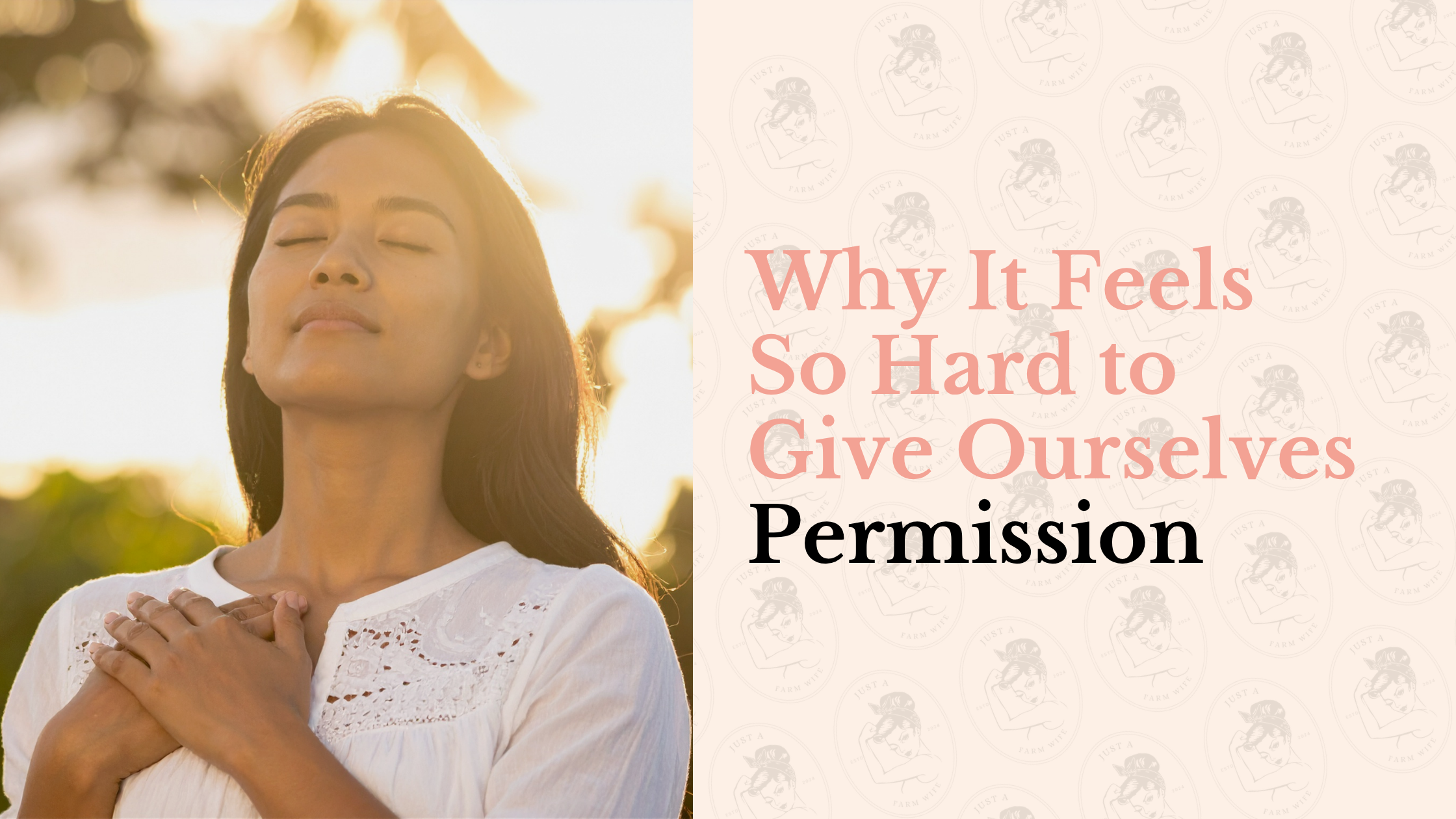
There’s a quiet tension so many women carry.
We want to grow.
We want to feel.
We want to evolve into something more aligned, more honest, more us.
But the moment we start to—something in us resists.
We hesitate before we speak the truth.
We downplay our emotions.
We second-guess our desire for more.
And without even realizing it, we deny ourselves permission.
Permission to feel something unpleasant.
Permission to want something different.
Permission to grow into a version of ourselves that might not be as easy for others to understand.
So why is it so hard?
⸻
1. We Were Taught That Being “Good” Meant Being Easy
Many of us didn’t grow up learning how to be.
We learned how to behave.
Be helpful.
Be kind.
Be agreeable.
Be low-maintenance.
And while none of those things are inherently wrong, they often came with an unspoken rule:
Don’t be inconvenient.
Unpleasant feelings—anger, frustration, resentment, even deep sadness—are inconvenient. They disrupt the environment. They make other people uncomfortable. They challenge dynamics that have been left unspoken for years.
So we learned to suppress them.
Not because we’re weak.
But because we were conditioned to believe that being accepted mattered more than being honest.
⸻
2. We Confuse Emotional Expression with Emotional Failure
Somewhere along the way, feeling deeply became something to fix.
If you’re overwhelmed, you need to calm down.
If you’re angry, you need to let it go.
If you’re hurt, you need to move on.
We rarely hear:
That makes sense.
Of course you feel that way.
There’s something here worth paying attention to.
So instead of seeing our emotions as signals, we see them as problems.
And when something feels like a problem, we try to eliminate it—not understand it.
But unpleasant feelings aren’t a sign that something is wrong with you.
They’re often a sign that something is right—that your body is alerting you to a boundary, a misalignment, or a truth you haven’t fully acknowledged yet.
⸻
3. Growth Requires Disruption—and That Can Feel Unsafe
Growth sounds beautiful in theory.
But in real life, growth is uncomfortable.
It asks you to:
Outgrow roles that once defined you
Question dynamics you once tolerated
Make decisions that others might not agree with
And for women especially, growth can feel like a risk to connection.
If I change… will they still accept me?
If I speak up… will I be seen differently?
If I choose myself… will I lose people?
So we stay where we are—not because we don’t want to grow, but because growth feels like it might cost us something.
And sometimes, it does.
But staying the same costs you something too.
⸻
4. We’ve Been Praised for Self-Sacrifice
Let’s be honest—women are often celebrated for how much they can carry.
How much they give.
How much they endure.
How much they hold together for everyone else.
And when that’s the standard, choosing yourself can feel… wrong.
Rest can feel lazy.
Boundaries can feel selfish.
Desire can feel excessive.
So instead of asking, What do I need?
We ask, What’s expected of me?
And over time, that disconnect builds.
Until one day you realize—you’ve been showing up for everyone… except yourself.
⸻
5. Permission Was Never Supposed to Come From Outside of You
This is the part that shifts everything.
Most of us are waiting for permission.
Permission to feel what we feel.
Permission to change direction.
Permission to want more, need more, be more.
But no one is coming to hand that to you.
Because it was never theirs to give.
Permission is something you decide.
Quietly.
Internally.
Sometimes without anyone else even understanding it yet.
It sounds like:
I’m allowed to feel this without rushing to fix it.
I’m allowed to outgrow this version of my life.
I’m allowed to want something different, even if it doesn’t make sense to everyone else.
⸻
What It Actually Looks Like to Give Yourself Permission
It’s not loud or dramatic.
It’s small, honest moments:
Sitting with a feeling instead of dismissing it.
Telling the truth, even if your voice shakes.
Choosing rest without explaining yourself.
Letting growth happen, even when it’s inconvenient.
It’s less about becoming someone new—and more about allowing yourself to finally be who you already are.
⸻
Final Thought
You are not too emotional.
You are not too much.
You are not wrong for wanting to grow.
You’ve just been operating without permission in a life that required it from everyone else.
And maybe today is the day you change that.
Not perfectly.
Not all at once.
But enough to say:
I’m allowed to feel.
I’m allowed to change.
I’m allowed to become.