
The Lie of “Good Vibes Only”: How Toxic Positivity Makes You Abandon Yourself
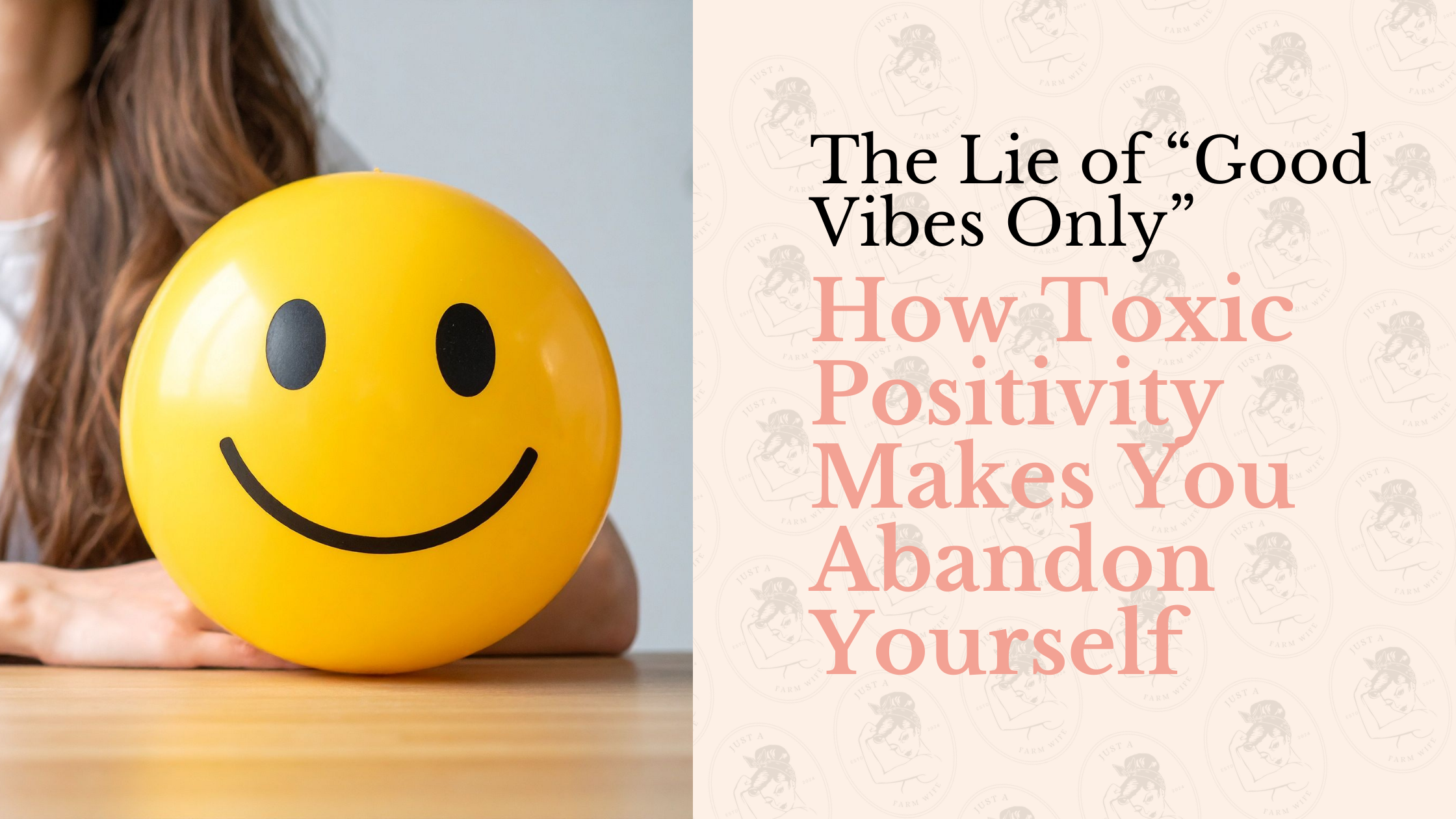
There was a season of my life when I thought strength meant smiling. When things hurt, I called it “growth.” When I was betrayed, I called it “a lesson.” When I was exhausted, I called it “gratitude.” I told myself everything was fine — even when it wasn’t.
That’s the thing about toxic positivity. It doesn’t look toxic at first. It looks spiritual. It sounds mature. It feels disciplined. But underneath it all, it’s often fear — fear of being too much, too emotional, too honest. And slowly, quietly, it teaches you to abandon yourself.
What Toxic Positivity Really Is
Toxic positivity isn’t optimism. It’s the refusal to acknowledge pain. It’s saying “Everything happens for a reason” too soon, “Stay positive” when your heart is breaking, or “At least…” when someone needs to be heard. It’s bypassing your humanity in the name of being “high vibe.” When you do it to yourself, it’s self-betrayal disguised as strength.
How It Shapes Your Reality
Your brain believes what you repeatedly tell it. If you constantly override your feelings with thoughts like “I shouldn’t feel this way,” “Other people have it worse,” or “I just need to be grateful,” you train your nervous system to distrust your own signals. Pain becomes something to suppress, anger something to shame, and intuition something to silence. Over time, you stop knowing what you actually feel. You create a reality where boundaries feel selfish, discomfort feels wrong, and authentic emotion feels dangerous. You become “easy,” “low maintenance,” and disconnected.
The Subtle Ways We Abandon Ourselves
Toxic positivity often sounds like: “I’m fine,” “It’s not a big deal,” or “I just need to work on myself more.” But sometimes, the most radical thing you can say is, “That hurt.” When you skip over your hurt, you teach yourself that your experience doesn’t matter. You stay in relationships longer than you should, accept behavior you wouldn’t want your daughter to accept, and spiritualize red flags. Because if everything is a blessing, nothing is allowed to be wrong.
The Cost of Always “Looking on the Bright Side”
There is a difference between resilience and repression. Resilience says, “This is painful — and I will move through it.” Toxic positivity says, “This isn’t painful — I shouldn’t feel this.” One integrates emotion, while the other erases it. Erased emotions don’t disappear; they show up as anxiety, chronic tension, bitterness you can’t explain, or a quiet resentment toward the people you keep “understanding.” You don’t lose your pain; you lose yourself.
Healing Isn’t Always Pretty
Real healing requires honesty. It requires letting yourself feel grief without rushing to meaning, anger without labeling it unspiritual, and disappointment without reframing it into gratitude too soon. Sometimes the most aligned thing you can do is admit, “This isn’t okay with me.” Not everything needs a silver lining. Some things need a boundary, distance, or truth.
Reclaiming Yourself
If you’ve been living in “good vibes only” mode, start small. Instead of forcing gratitude, try awareness. Instead of “I shouldn’t feel this,” try, “It makes sense that I feel this.” Instead of minimizing, try, “This matters to me.” You are allowed to be positive, have faith, and look for growth, but not at the expense of your own voice. You were not created to be agreeable. You were created to be whole. And wholeness includes tears.
Reclaim your voice, set boundaries, and embrace your entire self. You are meant to be whole, not just agreeable.