
The Truth Doesn’t Scare People — What It Reveals Does
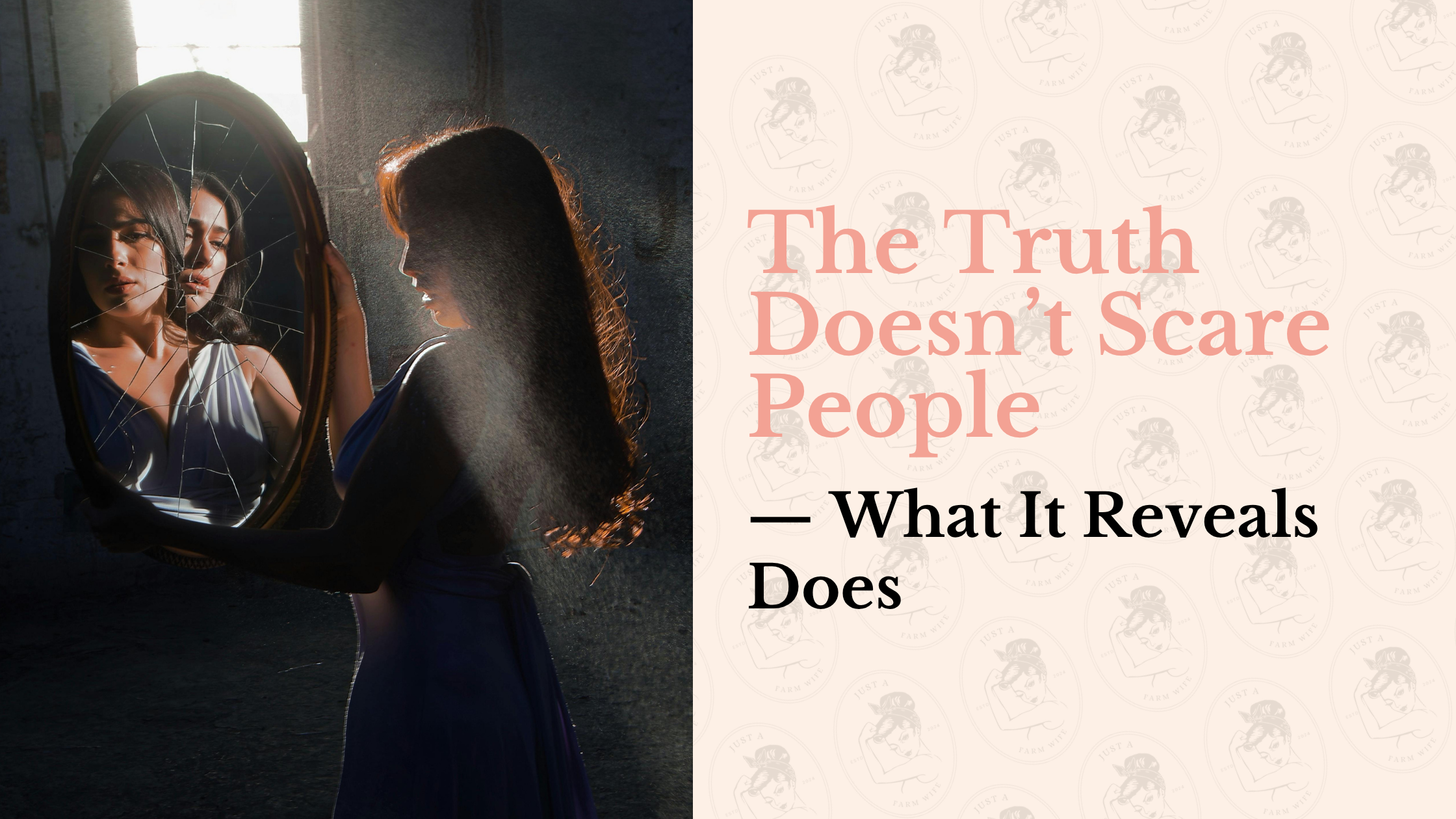
There’s a moment—quiet, almost invisible—when the truth lands.
Not the kind of truth that feels inspiring or validating.
The kind that feels like it just walked into your house uninvited and started opening drawers.
The kind that gets a little too close to home.
And when that happens… people don’t rise.
They react.
⸻
When the truth feels like exposure, not insight
We like to believe that truth sets people free.
But that’s only true when someone is ready to see it.
When they’re not? Truth doesn’t feel like freedom.
It feels like exposure.
It pokes at the exact places they’ve worked hard to protect—
the denial, the justification, the carefully built story they’ve told themselves to stay comfortable.
So instead of receiving it… they resist it.
Not because it’s wrong.
But because it’s right in a way they’re not prepared to face.
⸻
They don’t argue the truth—they protect their identity
When truth hits too close to home, people rarely say,
“you’re right, I need to look at that.”
They say things like:
“That’s not what happened.”
“You’re overreacting.”
“You always twist things.”
“You’re the problem.”
Because here’s the hard truth most people don’t talk about:
Accepting the truth would require them to see themselves differently.
And that’s not a small shift.
That’s an identity crack.
So instead of letting the truth reshape them…
they try to reshape the narrative.
⸻
Projection becomes their protection
This is where things start to feel confusing on your end.
Because suddenly, the person who caused the harm
starts acting like the one who’s been harmed.
They flip the roles.
They rewrite the story.
They assign you the weight that actually belongs to them.
Not because you deserve it.
But because carrying it themselves would require accountability.
And accountability feels heavier than blame—
to someone who hasn’t learned how to hold it.
⸻
You’ll feel the pressure to question yourself
This is the part that gets people stuck.
When someone else can’t face the truth,
they will often try to make you doubt it.
And if you’re someone who values honesty, integrity, and growth…
you’ll pause.
You’ll reflect.
You’ll ask yourself if you’re being too harsh.
Too sensitive.
Too much.
But here’s where your clarity matters:
Their discomfort with the truth does not make it untrue.
⸻
Not everyone wants healing—some want relief
This is where the conversation gets honest in a way most people avoid.
There are people who say they want growth…
but what they really want is relief.
Relief from guilt.
Relief from being seen clearly.
Relief from consequences.
And truth?
Truth interrupts relief.
Because truth asks for ownership.
And ownership requires change.
So instead of doing the deeper work,
they look for the quickest way out of discomfort.
Even if that means distorting reality.
⸻
You cannot force someone to face what they benefit from avoiding
This is where you reclaim your power.
Because once you see this clearly, you stop trying to:
explain it better
prove it harder
soften it enough for them to accept it
You realize something that changes everything:
People don’t miss the truth because they don’t understand it.
They miss it because accepting it would cost them something.
And not everyone is willing to pay that cost.
⸻
The truth will either refine someone… or reveal them
Truth doesn’t destroy people.
It reveals where they are.
For some, it becomes a turning point—
a moment of humility, growth, and ownership.
For others, it becomes a mirror they refuse to look into.
And how someone responds to truth
will tell you far more than anything they say.
⸻
The work is not convincing—it’s discerning
You don’t need to carry the burden of making someone else see clearly.
Your work is quieter than that.
But far more powerful.
It’s learning to discern:
who is willing to grow
who is committed to staying comfortable
and who needs distance, not explanation
Because truth doesn’t need defending.
It needs grounded people who are willing to stand in it—
even when others try to shake it.
⸻
There’s nothing wrong with you for seeing clearly.
And there’s nothing wrong with someone else not being ready to.
But confusing those two things?
That’s where people lose themselves.
And you’re not doing that anymore.