
3 Ways a “Bad” Person Spins the Story in Their Own Mind After They’ve Wronged You—Especially When You Didn’t Do Anything Back
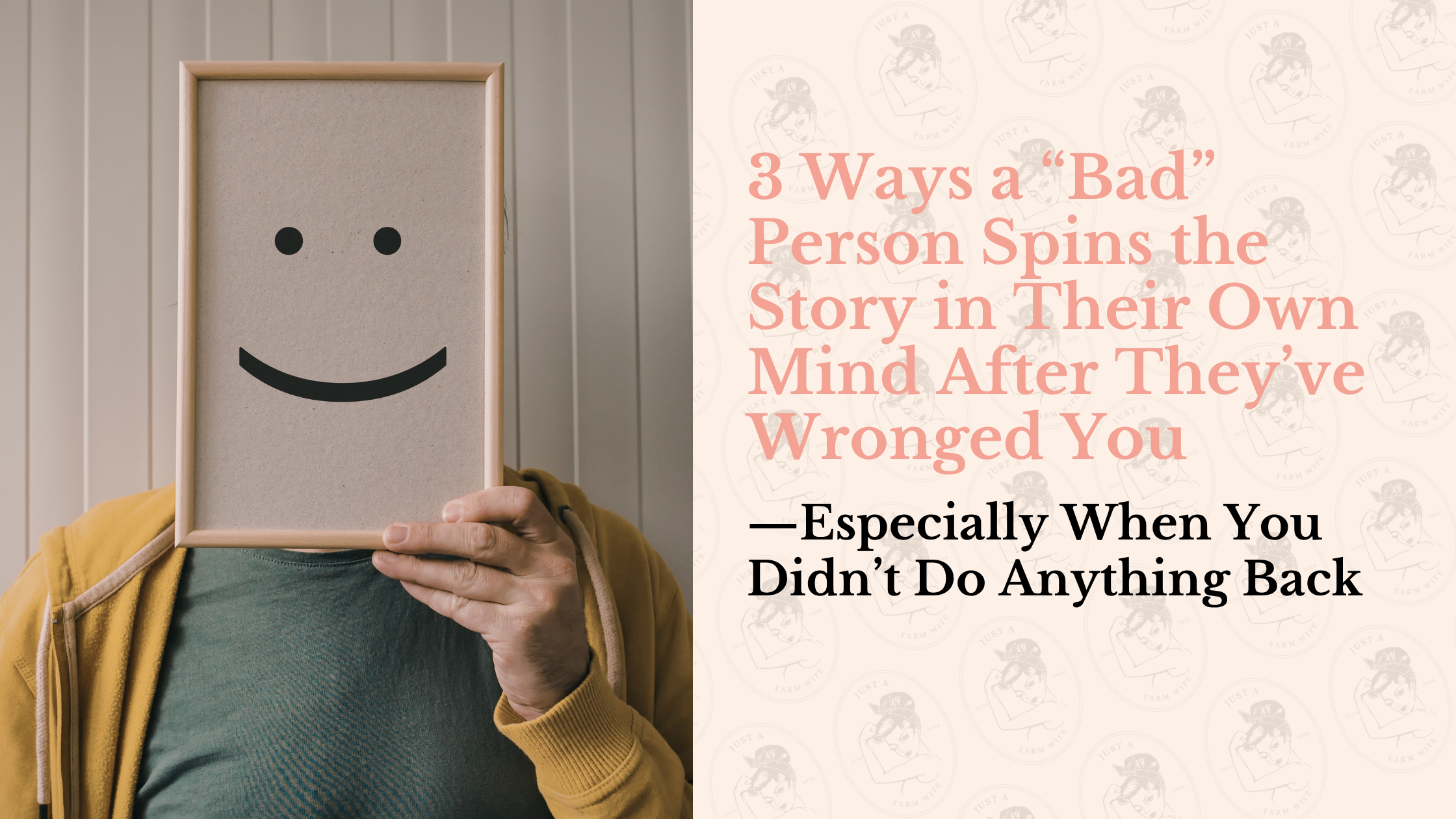
There’s a version of this no one prepares you for.
You don’t retaliate.
You don’t chase.
You don’t even fully explain yourself.
You just… step back.
And instead of that creating clarity, it creates noise—in them.
Because when someone does something they know, on some level, wasn’t right—and you don’t give them a reaction to stabilize against—they have to sit with themselves.
And a lot of people won’t.
So they start spinning.
Not necessarily out loud at first.
But internally, they build a version of the story they can live with.
Here are three of the most common ways that happens.
⸻
1. They turn your silence into proof that you’re the problem
When you don’t react, they don’t experience relief.
They experience exposure.
There’s no argument to hide inside.
No chaos to blur the lines.
Just space.
And space forces reflection… which turns into discomfort.
So instead of sitting in that discomfort, they reinterpret your silence:
“She’s being cold”
“She’s immature for not talking about it”
“She thinks she’s better than me”
Your grounded response becomes their justification.
This is what happens when someone can’t tolerate the internal tension between who they believe they are… and what they did.
Instead of updating their behavior, they update the story.
From a deeper lens, your nervous system has chosen non-engagement—a form of regulation.
But to someone operating in internal chaos, regulation looks like rejection.
So they label it.
And labeling it helps them avoid feeling it.
⸻
2. They assign you a motive you never had
When someone can’t understand your behavior through truth, they’ll create a motive that makes it make sense to them.
Especially when you didn’t fight back.
You’ll become:
“manipulative”
“strategic”
“playing games”
“trying to make them look bad”
Because in their mind, everything has to be a move.
If they operate from defensiveness or control, they assume you do too.
So your lack of reaction doesn’t register as peace…
It registers as a hidden agenda.
This is projection.
And it’s powerful because it sounds believable—even to you, if you sit in it too long.
But here’s the grounded truth:
Not every calm response is calculated.
Not every boundary is manipulation.
Not every step back is a strategy.
Sometimes it’s just someone choosing not to abandon themselves again.
And people who haven’t done that work yet… don’t recognize it when they see it.
⸻
3. They slowly recast themselves as the one who was wronged
This one doesn’t always happen immediately.
It builds.
At first, there’s discomfort. Maybe even quiet guilt.
But over time, if they don’t face it, the story evolves.
Now it becomes:
“I tried”
“I didn’t deserve to be treated like that”
“She overreacted by pulling away”
“I’m the one who got hurt in the end”
And this is where it flips completely.
Because if they can position themselves as the victim, they don’t have to revisit the original moment at all.
This is the mind protecting identity.
Because holding the truth—“I hurt someone who didn’t deserve it”—requires a level of emotional responsibility that not everyone is willing to carry.
So instead, they soften their role and magnify yours.
Not because it’s accurate.
Because it’s livable.
⸻
What you need to understand about this
None of this requires your participation.
That’s the part that can feel disorienting.
You didn’t argue.
You didn’t defend yourself.
You didn’t escalate anything.
And yet… a whole narrative still gets built.
This is where a lot of people get pulled back in.
Because you feel the urge to correct it. To clarify. To make it right.
But not every misunderstanding is actually a misunderstanding.
Some are constructions.
And no amount of explaining will dismantle a story someone is committed to believing.
There’s a concept Brené Brown talks about—the stories we make up when we don’t have full information.
The difference here is:
they had the information.
They just didn’t want the responsibility that came with it.
So they built something else.
⸻
The grounded response
You don’t need to win the narrative.
You don’t need to be understood by someone committed to misunderstanding you.
And you don’t need to carry the weight of how someone else avoids themselves.
If anything, your lack of reaction already said what needed to be said.
Not loudly.
But clearly.
And from a deeper level—this is expansion.
You didn’t collapse into reaction.
You didn’t abandon your internal truth to manage someone else’s comfort.
You stayed.
That’s not weakness.
That’s alignment.
Let them spin.
You don’t have to follow.